27 September, 2006

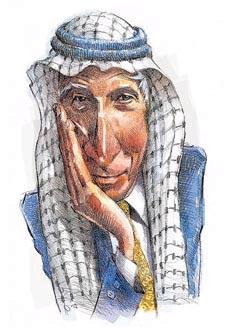
The Voice of Zora Neale Hurston


Click here to listen to audio clips of Zora Neale speaking (and even singing!) from the Online Classroom of the Florida Memory Project.


What do you think of that? Post a comment!

24 September, 2006

Complex (but simple) Symbolism: The Parables of Jesus

Having trouble understanding symbolism?
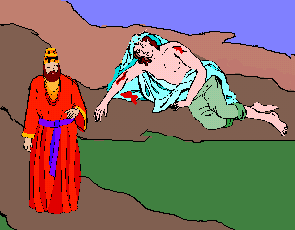
One of the easiest exercises to grasp how symbolism works--that is, objects or persons or things representing something beyond the literal object or person or thing--is to look at the familiar parables of Jesus found in the New Testament. Kennedy and Gioia include two very familiar biblical parables in your textbook:
        • "The Parable of the Good Seed" (Page 646)
        • "The Parable of the Prodigal Son" (Page 190)
Before you read the parables, look up both "allergory" and "parable" in the glossary of literary terms in your text (or look up the words on the Internet). You will how characters, places, and events in a parable have meaning on a literal level as well as a symbolic level.

If you'd like to look at a website that has links to parables as well as a discussion of what a parable is and how it relates to understanding symbolism, click here.

If you'd like to check out a multimedia version of the famous Parable of the Good Samaritan, click here.

Literary Analysis #3 will provide you an opportunity to write about symbolism in some of the selections you've read in the course, including the possibility of writing to explain one of these parables. If the idea of writing about one of the parables in Kennedy and Gioia's text appeals to you, be thinking along those lines. (But remember you have Lit. Analysis #2 to tackle before that! LOL).

Visitors to the blog are welcome to post comments. (Please, no anonymous posts--Let us know who you are.)

19 September, 2006

Symbolically Yours: Symbolism in Literature


A symbol in literature, as defined by Kennedy and Gioia, is "a person, place, or thing in a narrative [or poem] that suggests meanings beyond its literal sense.


In "A&P," for instance, the store represents more than a grocery store, for it's slogan "We have the best values in town" has a double meaning: in other words, the store is not just a place to buy groceries--the store, along with its manager Lengel, represents the solid community social traditions and moral values. It's more than just a store!


And in "Everyday Use," how about the quilts? Are they just old bed comforters? Or do the quilts, beyond their "everyday use," represent the idea of family values and tradition?

Steinbeck's story "The Chrysanthemums," is rich in symbolism, but let's leave that discussion for the Discussion Board. Happy reading!

Click here for additional readings about literary symbolism.

Question for general Blogservation (comment, in other words, from 1002 students or anyone else visiting the blog who has an opinion or an idea): What are some other common symbols you can think of from any source. . . for example, from our culture? from movies you have seen? from other familiar stories or novels? from music or art?

Painting Credits on this page:

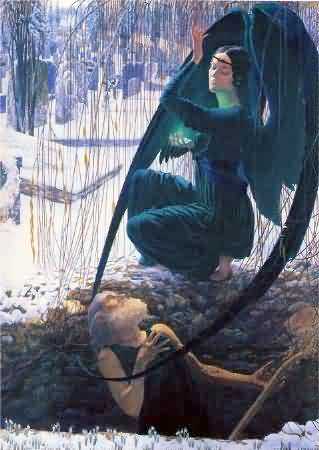
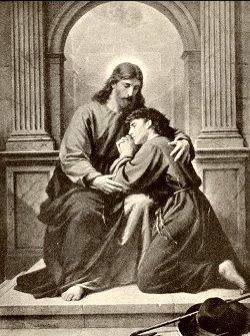
Deathgrave by Carlos Schwabe (above) and Safe in the Arms of Jesus (above right)

15 September, 2006

The Life and Times of Alice Walker

Click here to the Wikipedia free encyclopedia article about Alice Walker, her life and times. The article is rich with other links to websites, photos, and even videos. Check out Alice's life and times.

Can you relate anything you find in Walker's life story to "Everyday Use?" Post a comment to the blog.

Comments from non-English 1002 students are welcome! Post your blogservations!

13 September, 2006

The College Online Writing Lab: Check out the OWL!


Do you need wisdom for college writing assignments?
Visit the OWL!
(Online Writing Lab at Purdue University)
Click here to visit the Online Writing Lab.

You'll find resources to help with . . .
  • essay organization and structure
  • grammar and punctuation
  • MLA style
  • literary analysis
  • writing from research
  • paragraphing
  • sentence problems
  • anything else that ails you as a writer!
Visit the site. Post a comment here on the blog about what you find helpful or useful so others can get help, too!

10 September, 2006

Improve your active reading skills!


"Qualty reading precedes quality writing."
--David Pulling

Reading assignments for English 1002 are more difficult than reading your hometown newspaper!

How have you adapted your reading style to meet the challenge?

Click here for a link to a syllabus from a college literature course that includes practical suggestions and advice on active reading. The literature teacher that designed this site had students like YOU in mind!

Not only does the syllabus have good information, it also includes links to other resources that may help you. Try it out. If you try some reading strategy that works, post a comment.

06 September, 2006

To Believe, or Not to Believe . . . The Unreliable Narrator!


The first two reading selections this semester--Updike's "A&P" and Poe's "The Tell-Tale Heart"--are both related from the view points of unreliable narrators. Since that's one of the writing options for Literary Analysis #1, why not blog it? Check out the link to a Wikipedia article (click here) with a more prolonged discussion of this literary term than you'll find in your textbook.

04 September, 2006

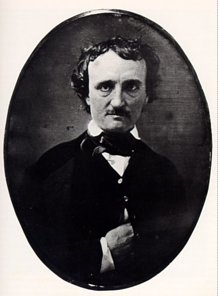
The Death of Edgar Allan Poe


No other writer in our lineup of ten literary modules this semester has so much myth and fantastical tales surrounding him than Edgar Allan Poe.

Who or What was he?

A drug addict?
Couldn't handle booze?
An incestuous pervert?
A loser who couldn't finish a job?

Or was he a talented writer and practical businessman who knew that twisted stories were marketable to a reading public thirsty for tales from the dark side?

Well, English 1002 (or anybody else happening along this blog), what do you think may be the answer to those questions?

Don't simply base your judgment on reading "The Tell-Tale Heart." Do some research and backgound investigation. Look at the big picture. Then come back with an informed response. By all means, post your comments!

For a link to info. about Poe's mysterious death, which has helped to fuel many of the Poe legends and myths, click
here.

02 September, 2006

THE GREAT ATLANTIC AND PACIFIC TEA COMPANY: A&P


(David Pulling's English 1002 class at LSU-Eunice is reading and discussing John Updike's short story "A&P.")

Updike's story is set in 1961 in an A&P supermarket chain store. In the late 1960's, A&P was the largest national supermarket chain in the country. A&P stores were common in South Louisiana in those days, too--I remember a store in Ville Platte as recently as the late 80's or early 90's, in fact. Of course, I worked at an A&P in my home town of Covington during the late 60's and early 70's when I was in high school and the early years of college. A&P's were common throughout the state in those days, with a major warehouse facility on Jefferson Highway in Metairie.

Just so you'll know, A&P (short for "The Great Atlantic and Pacific Tea Company") is still around in other parts of the country, although I haven't seen a store in South Louisiana in years. You can visit their web site at http://www.apsupermarket.com/.

The A&P store fronts in the 60's and 70's were marked by a distinctive colonial style architecture--very appropriate to support Lengel's "traditional American values" theme! If you're observant, you can still see that colonial architecture in abandoned strip malls throughout small Louisiana towns where A&P stores used to be located.

Does anybody remember an A&P supermarket besides the "old" teacher?

25 August, 2006

Updike, Downdike, All-arounddike!


English 1002 begins the semester reading and writing about John Updike. (That's John smiling lovingly in the pictures, the one on the left "fer real," the other obviously a cariciature (Ooh, cariciature--that's a vocabulary word! Who knows what that means?)
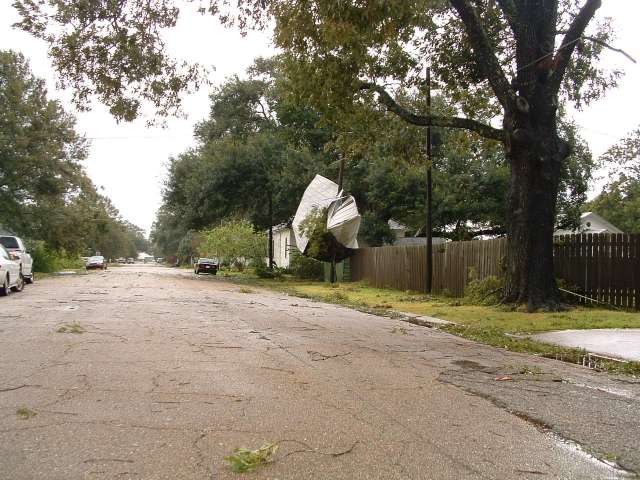
Students in the class will have the opportunity to discuss Updike and the representative short story "A&P" in the course's Blackboard discussion board, but that's a closed forum. This blog is an open forum! In other words, anybody in the world--not just students in English 1002 class-- can post a comment, or reply to someone else's comment--right here!

So let's see what happens! Whoever you are-- 1002 student, literary critic, common Joe/Jane on the street--Have you read Updike? Whatcha think of Updike? And if that doesn't interest you, whatcha think of life? the meaning of life? The English 1002 class you're in now, or a second semester comp. class you took a long time ago?

Post one, post all! Join the Updike free-for-all!

23 August, 2006

Accidental Poetry: "Accidentally yours . . . ?"


Hopefully, one of the most reliable indicators of poetic impulse or instinct in a writer is the capacity to demonstrate not only a facility with words, but also a fascination with words--a "head full of logos," as I once composed in a verse celebrating the creative impulse of language (that Greek word "logos" is so much richer than our boring English "word!") .

Writers with this "head full of logos" show a propensity to erupt in spontaneous wordplay, even as they trudge through drafts of otherwise functional and/or transactional writing tasks-- a memo, an email message, a note to co-workers, even a shopping list. This spontaeous wordplay often produces what I term accidental poetry: usually brief poetic expressions resulting from the writer's recursive experimentation with revision and word possibilities.

For me, the process works this way: As I labor at a writing task, I occasional get caught up in fanciful experiments with word sounds, phrasal rhythms, word combinations that produce alliteration or assonance, some clever way of turning a phrase, or even a combination of these strategies. This distraction begins as a sub-conscious and unintentional loss of focus as some interesting possibility leads me off task, but as I wake to find myself wandering off in that direction, instead of redirecting myself to the task at hand, I succumb to the impulse and "play!" Here's an example of an "accidental" verse that spilled out of my keyboard yesterday as I posted a blog comment:

And what's our cheer
this year
down here
along the Coast?
Death to hurricanes!


Of course, it's not great poetry. But nor is it serious poetry-- It's just "accidental poetry," a casual invention that's sometimes cute and almost always fun, something to tuck away in a journal or a corner of the portfolio for future reference and further elaboration--or maybe never. But one way or the other, here I am with this "head full of logos!"

Any other "accidental" poets out there? I'd like to compare notes.


21 August, 2006

Whatchy'all think of "y'all?"

Want to turn heads in a small college town in Northern California? Go into the local Starbucks and ask the attendants, "How are y'all?"

The user of that contracted form of "you all" attains immediate recognition as one not from those parts, followed by the inevitable "Where are you from?" I experienced that quite a bit earlier this summer.

So the question arises, especially for one rhetorically and poetically inclined in the profession of letters, "Is 'y'all' a legitimate word?" I've never thought of it as otherwise, but then again, I was raised in the Deep South.

Thus, I was gratified, at least according to one source, Wikipedia, that the word conforms to an acknowledged standard spelling ("y'all" as opposed to the incorrect "ya'll") and even an acknowledged possessive form: "y'all's." I was pleased to discover such linguistic acceptance., for like many Southerners, I feel compelled to be defensive about our speech and our usage because some non-Southerners judge our regional vernacular as sub-standard. They often base that judgment solely on our accent, even when we otherwise follow conventional usage standards for formal English.

Admittedly, Wikipedia consigns "y'all" to informal as opposed to formal usage situations. But I can live with that. I'm just pleased that credible sources accept and acknowledge our regional linguistic values and tradtions.

Now the next question: Why is the way we speak seemingly more important to Southerners than to other Americans? That's a good question for a future blogservation. Maybe someone will have opinion and offer a post.

So what do y'all think about that?

20 August, 2006

Behold the Teacher!

Since so much of my teaching is web-based, maybe some of my students would be interested in knowing what I look like. Here's a portrait I believe my daughter snapped in the past year: Observe the casual pose, if you will--I chose that particular shot simply because the don't-take-myself-too-seriously demeanor that comes across (to me, anyway) is "me." I hope it works for you!

If you are a student in my classes, I look forward to getting to know you once the semester starts August 26. If you are a visitor just poking around, thanks for stopping by. As we say down South, "Do come back," and don't hesitate to post a message so we'll have a record of your visit and your impressions of what goes on here.